

Could That Home Sitting on the Market Be Your Best Buying Opportunity?

Scott Perry • July 9, 2026

Share this article

When browsing homes online, it’s easy to notice listings that have been sitting on the market for weeks—or even months. Many buyers immediately assume something must be wrong with the property and move on to the next listing.


But in today’s market, that assumption could mean missing out on one of the best buying opportunities available.


In many cases, homes that have been on the market longer simply have sellers who are more willing to negotiate, creating opportunities for buyers to secure better pricing or favorable terms.


Why Longer Days on Market Can Work in Your Favor:


If affordability has been one of the biggest obstacles in your home search, it may be worth taking a closer look at listings that have been available longer than average.


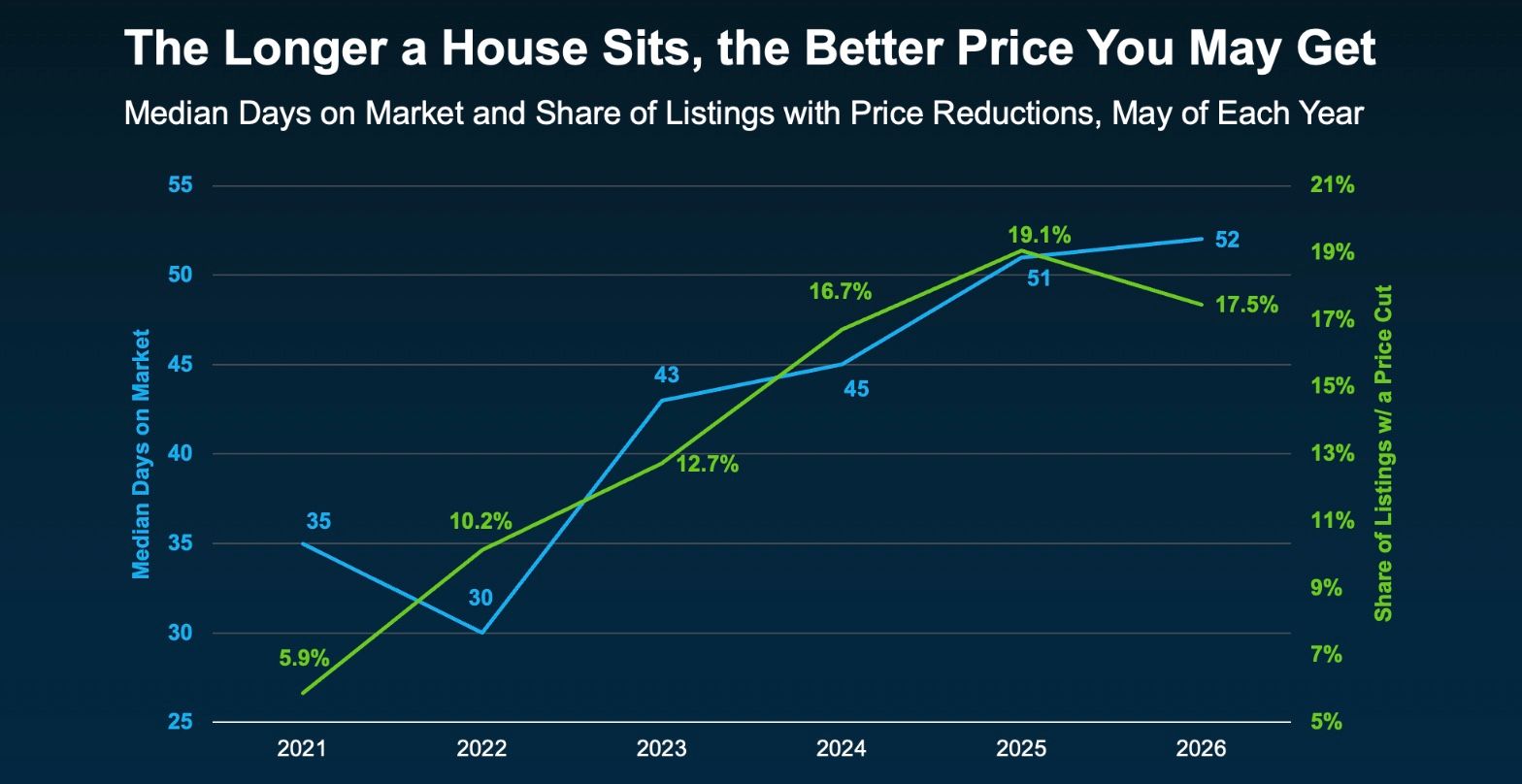
As homes spend more time on the market, sellers often become more motivated to attract buyers. One common way they do that is by reducing the asking price or becoming more flexible during negotiations.


Recent housing market data shows a clear relationship between longer days on market and an increase in price reductions.

This doesn’t mean every older listing is a bargain, but it does suggest that buyers may have more negotiating power than they realize. Instead of limiting your search to newly listed homes, consider asking your real estate agent to include properties that have been available for a longer period. You may discover a home that fits both your needs and your budget.


A Home Sitting on the Market Doesn’t Always Mean There’s a Problem:


One of the biggest misconceptions in real estate is that a home that’s been listed for several weeks must have hidden issues. While that can occasionally be true, there are many other reasons a property may take longer to sell.


Some of the most common include:


  • The home was initially priced too high.
  • The listing photos didn’t showcase the property effectively.
  • There are more competing homes available in the neighborhood.
  • The property entered the market during a slower buying period.
  • None of these situations necessarily reflect the condition of the home itself.


If there are legitimate concerns with the property, a professional home inspection will typically identify them before closing. That information can then become part of the negotiation process rather than a reason to automatically walk away.


How Buyers Can Take Advantage of Older Listings:


If you find a home that’s been sitting on the market, there are several strategies that may improve your position during negotiations.


Submit a Competitive Offer Based on Comparable Sales:


Rather than focusing solely on the asking price, review recent comparable sales with your real estate agent.


If similar homes have sold for less, you may have room to submit an offer below the current list price—particularly if the seller is motivated.


Negotiate Seller Concessions:


Price isn’t the only area where buyers may benefit. Even if a seller isn’t willing to significantly reduce the purchase price, they may be open to offering concessions such as:


  • Assistance with closing costs
  • Repair credits
  • A mortgage rate buydown
  • Flexible closing timelines


These concessions can reduce your upfront expenses or lower your monthly housing costs, making the purchase even more affordable.

Local Market Knowledge Makes All the Difference:


Not every lingering listing represents a great opportunity. Some homes remain unsold because they’re overpriced or need significant repairs, while others simply haven’t found the right buyer yet.


An experienced local real estate agent can help you distinguish between properties worth pursuing and those that may be better left alone.


Having that local insight can save time, strengthen your negotiating position, and help you recognize opportunities that other buyers may overlook.


Bottom Line:


A home that’s been on the market for a while isn’t always a warning sign.


In today’s market, it may actually represent one of the best opportunities to negotiate a better price, receive seller concessions, or purchase a home that would have otherwise been outside your budget.


If you’re searching for a home, don’t overlook listings simply because they’ve been available longer than expected. With the guidance of a knowledgeable local real estate professional, those overlooked properties could become your next home.

Recent Posts

By Scott Perry July 9, 2026
Discover how your Silicon Valley home equity could help you relocate, simplify your lifestyle, and create more financial freedom in retirement.
By Scott Perry July 2, 2026
Learn when paying a buyer’s closing costs makes sense, how seller concessions work, and strategies to help your home sell faster in today’s market.
By Scott Perry June 26, 2026
Learn whether an estate sale or junk removal is the smarter choice when selling an inherited home, and discover which option saves time or maximizes value.
Older couple looking at a laptop in a bright office, with a white coffee cup nearby
By Scott Perry June 20, 2026
Thinking about downsizing in retirement? Learn why some retirees are choosing to upsize instead and how it may help support the next generation.
By Scott Perry June 12, 2026
Learn how off-market home sales may affect property values, tax assessments, and market transparency in today’s housing market.
By Scott Perry June 12, 2026
Learn how the Corporate Transparency Act could affect homeowners associations, compliance costs, and the future of HOA fees.
By Scott Perry June 4, 2026
Smaller homes and condos are helping buyers improve affordability while enjoying modern features, lower costs, and lifestyle-focused communities.
By Scott Perry May 29, 2026
Discover how co-buying can help first-time buyers overcome affordability challenges and achieve homeownership sooner.
By Scott Perry May 22, 2026
Discover how Italy’s famous 1 euro homes really work, including renovation requirements, hidden costs, and why buyers are still interested.
By Scott Perry May 22, 2026
Worried about home prices falling? Explore what historical housing data and current market trends suggest about long-term home values.
Show More