

Are Home Prices Going To Fall? Here’s What History Shows
One of the biggest concerns many buyers have right now is simple:
What if I buy a home and prices go down afterward?
With constant headlines about the housing market and the economy, it’s understandable why some buyers feel hesitant. Purchasing a home is a major financial decision, and nobody wants to feel like they’re making the wrong move at the wrong time.
But it’s important to look beyond short-term headlines and focus on the bigger picture.
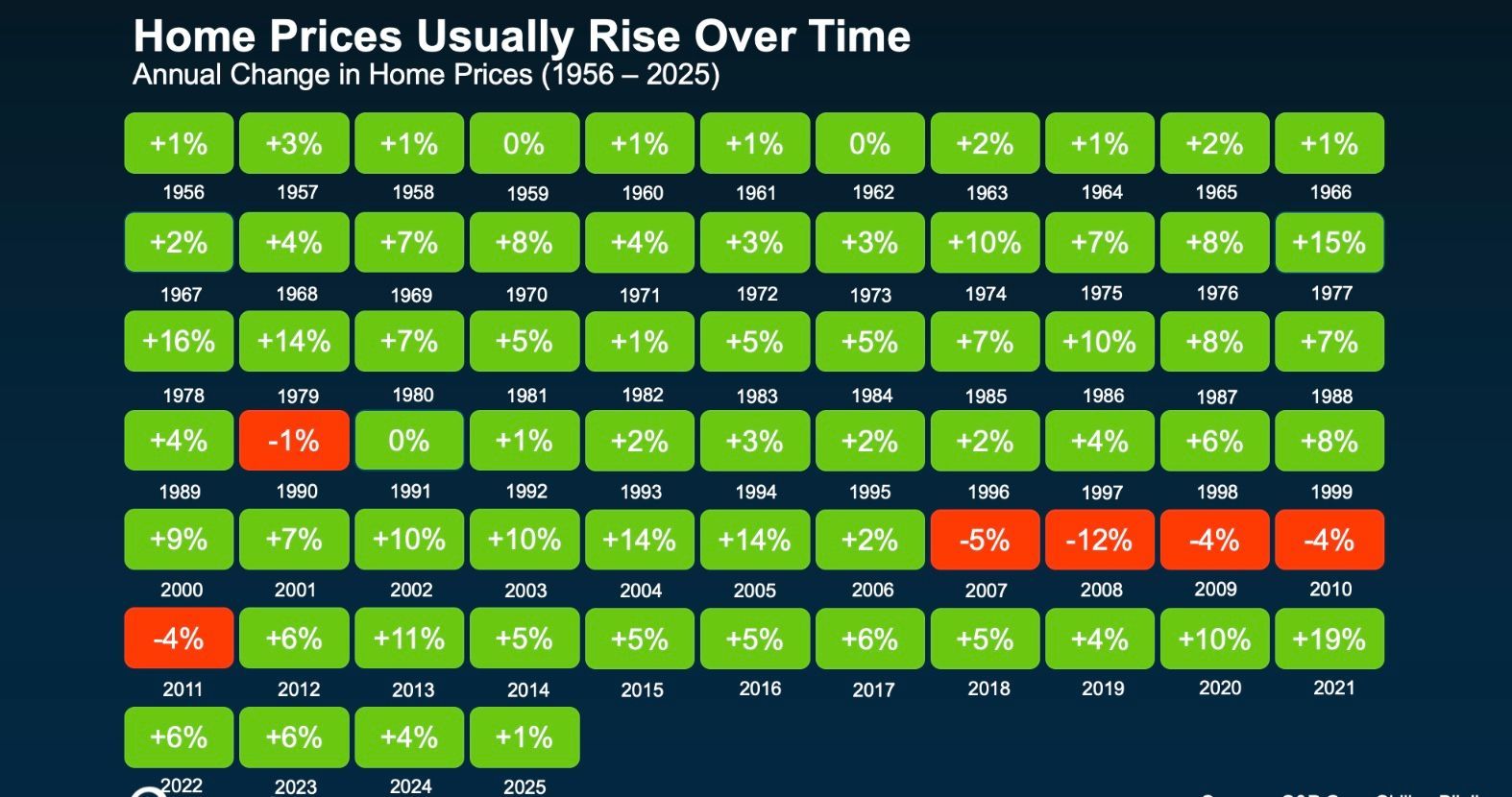
Historically, home prices have generally increased over time.
What the Long-Term Data Shows:
When you step back and look at decades of housing data, one trend becomes clear: home values have shown long-term growth throughout most market cycles.
Data tracking home prices dating back to the 1950s shows that, outside of major economic events like the 2008 housing crash, prices have either remained stable or continued to rise in most years.
That long-term consistency is something many short-term market discussions tend to overlook.
While temporary fluctuations can happen in certain markets or during periods of economic uncertainty, real estate has historically trended upward over time.
Why Home Prices Tend To Rise:
There are several key factors that continue to support long-term home values.
Ongoing Housing Demand People will always need places to live. Life events such as job changes, growing families, retirement, and relocation continue creating housing demand regardless of market conditions.
- Limited Housing Supply: Although inventory has improved in some areas, many markets still face a shortage of available homes compared to buyer demand. Limited supply can continue placing upward pressure on prices.
- Inflation: Like many goods and assets, home values tend to rise over time as inflation increases the overall cost of living and construction.
Together, these factors have historically helped support long-term appreciation in housing markets.
What This Means for Buyers:
It’s easy to focus on what might happen in the next few months, especially for first-time buyers navigating an uncertain market. But real estate has typically been a long-term investment rather than a short-term strategy.
That doesn’t mean prices rise every single year in every location. Real estate is local, and some markets may experience temporary slowdowns or modest price adjustments from time to time.
However, history shows that those declines have often been temporary. That’s one reason many real estate professionals recommend buying only when:
- The timing works for your personal and financial goals
- You plan to stay in the home for several years
- Longer ownership timelines generally allow homeowners more opportunity to benefit from long-term appreciation and build equity over time.
Real Estate and Long-Term Wealth Building:
For many homeowners, rising property values can become an important contributor to long-term financial growth.
As home values increase and equity builds over time, homeownership can support broader wealth-building goals in ways that renting often cannot.
The goal isn’t necessarily to perfectly “time” the market. Instead, it’s about making a decision that aligns with your lifestyle, finances, and long-term plans.
The Bottom Line:
While short-term market shifts can happen, home prices have historically shown a strong long-term upward trend.
That’s why real estate continues to be viewed by many as a long-term investment rather than a short-term gamble.
Of course, buying a home should always be a personal decision based on your goals, timeline, and financial comfort level.
And because every market is different — especially in areas like Silicon Valley — having local insight can make a big difference when evaluating current market conditions and opportunities.