
Buying and Selling at the Same Time? Here's What You Need to Know

Scott Perry • April 28, 2026

Share this article

If you’re a homeowner planning to move, you’re probably wondering what the process is going to look like and what you should tackle first:


Is it better to start by finding your next home?

Or should you sell your current house before you go out looking?


Ultimately, what’s right for you depends on a lot of factors. And that’s where an agent’s experience can really help make your next step clear.


They know your local market, the latest trends, and what’s working for other homeowners right now. And they’ll be able to make a recommendation based on their expertise and your needs.


But here’s a little bit of a sneak peek. In many cases today, getting your current home on the market first can put you in a better spot. Here’s why that order tends to work best (and how an agent can help).


The Advantages Of Selling First


A) You'll Unlock Your Home Equity

Selling your current home before you try to buy your next one allows you to access the equity you’ve built up – and based on home price appreciation over the past few years, that’s no small number from Cotality (formerly CoreLogic) shows the average homeowner is sitting on $302K in equity today.


And once you sell, you can use that equity to pay for the down payment on your next house (and maybe even more). You could even have enough to buy your next house. That’s a big deal, and it could make your next move a whole lot easier on your wallet.


B) You Won't Be Juggling Two Mortgages

Trying to buy before you sell means you could wind up holding two mortgages, even if just for a few months. That can get expensive, fast – especially if there are unexpected repairs or delays. Selling first removes that stress and helps you move forward without the financial strain. As Ramsey Solutions says:


“It’s best to sell your old home before buying a new one to avoid unnecessary risks and possible headaches.”


C) You'll Be In A Stronger Position

Sellers love a clean, simple offer. If you’ve already sold your house, you don’t need to make your offer contingent on that sale – and that can help you stand out. Your agent can position your offer to be as strong as possible, so you have the best shot at getting the home you want.


This can be a big advantage in competitive markets where sellers prefer buyers with fewer strings attached.


One Thing To Keep In Mind


But, like with anything in life, there are tradeoffs. As you weigh your options, consider this potential drawback, too:


A) You May Need A Place To Stay Temporary

Once your house sells, you may need a short-term rental or to stay with family until you can move into your next home. Your agent can help you negotiate things like a post-closing occupancy (renting the home from the buyer for a set period) or flexible closing dates to help smooth out that transition as much as possible.


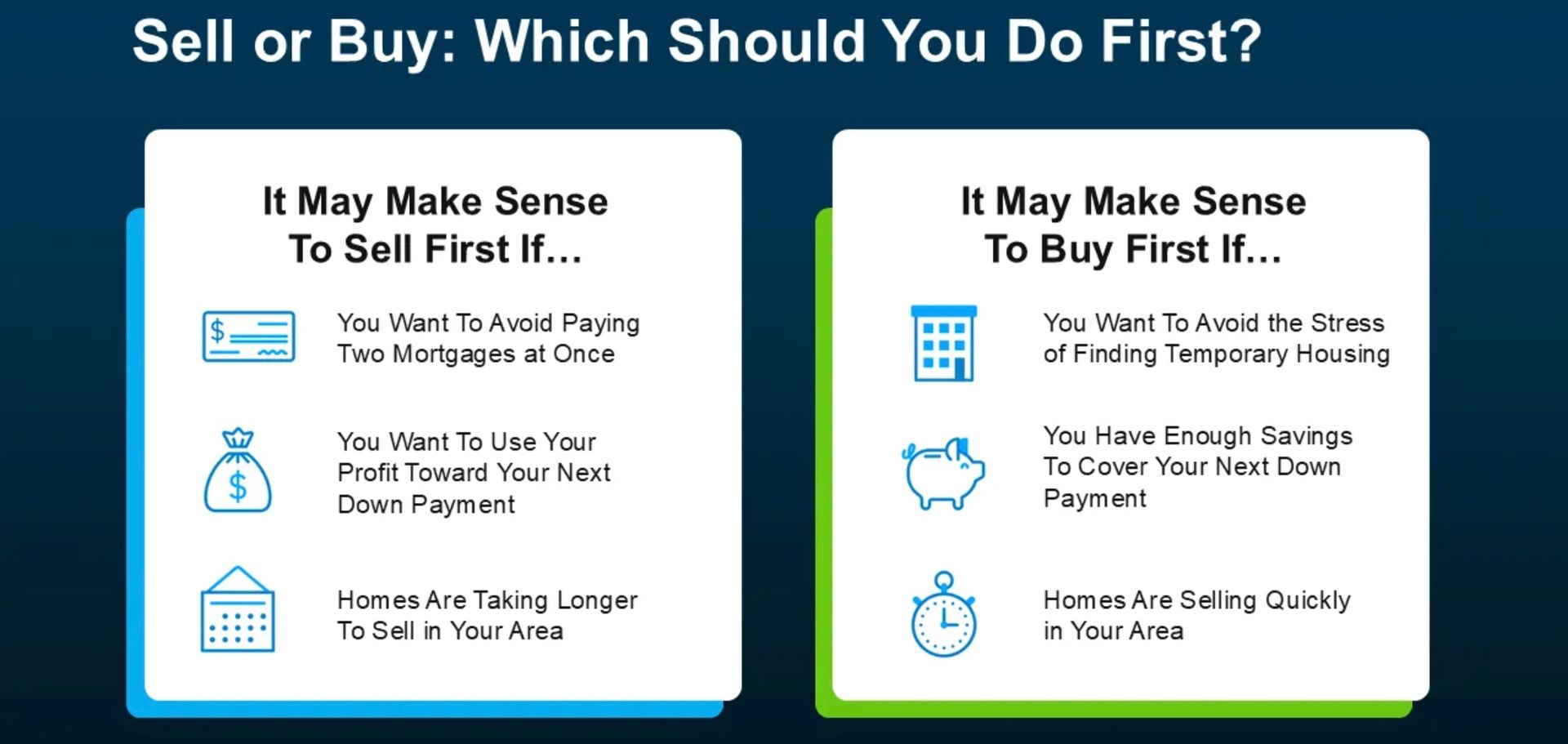
Here's a simple visual that can help you to think through your options (see below):

But the best way to determine what’s best for you and your specific situation? Talk to a trusted local agent.


Bottom Line

In many cases, selling first doesn’t just give you clarity, it gives you options. It helps you buy with more confidence, more financial power, and less pressure.


If you're ready to make a move but not sure where to begin, talk to a local agent. They'll walk you through your equity, your timing, and your local market so you can decide what’s right for you.

Recent Posts

By Scott Perry • October 22, 2026
Explore California’s 2026 housing ballot measures and what Propositions 1, 37, and 45 could mean for Silicon Valley buyers and homeowners.

By Scott Perry • October 2, 2026
Inherited a home with a reverse mortgage? Learn about important deadlines, selling or keeping the home, property value, and the professionals who can help

Stone house with wooden balconies and a covered patio beside a green lawn and trees
By Scott Perry • September 25, 2026
Thinking about buying a vacation home? Learn about insurance, taxes, maintenance, management, vacancy, and other costs to consider before you buy.

By Scott Perry • September 24, 2026
Get your home ready for cooler weather and seasonal rain with this fall maintenance checklist covering HVAC, gutters, roofing, safety, landscaping, and more.

Family of three walking hand in hand down a winding dirt path in a colorful autumn forest
By Scott Perry • September 22, 2026
Discover local events, festivals, celebrations, and things to do throughout Silicon Valley and the Peninsula. Check back for new seasonal activities and events.

By Scott Perry • September 17, 2026
See why walkability matters to homebuyers and what Silicon Valley families should consider before paying more to live near schools, parks, shops, and more.

By Scott Perry • September 17, 2026
Thinking about a fall move? See what current Silicon Valley market data means for buyers and sellers and whether moving this season could make sense.
By Scott Perry • September 11, 2026
Should you pay more for a Silicon Valley home or budget for private school? Compare housing, tuition, property taxes, and long-term financial costs.
By Scott Perry • September 11, 2026
Learn how Silicon Valley buyers and sellers can use comparable sales and local market data to avoid overpricing a home or paying more than it’s worth.

By Scott Perry • September 4, 2026
Buying a Silicon Valley condo or townhome? Learn 4 HOA red flags to check, including reserves, insurance, assessments, maintenance, and community rules.

Show More