


Pre-Qualification vs. Pre-Approval: What’s the Difference and Why It Matters in Silicon Valley

Scott Perry • August 4, 2026

Share this article

If you’re thinking about buying a home, you’ve probably heard the terms pre-qualification and pre-approval used interchangeably.


While they may sound similar, they’re actually two very different steps in the home-buying process.


Understanding the difference can help you shop with confidence, strengthen your negotiating position, and avoid surprises once you’re ready to make an offer—especially in a competitive market like Silicon Valley.


Let’s break down what each one means and when you should use them.


What Is a Mortgage Pre-Qualification?


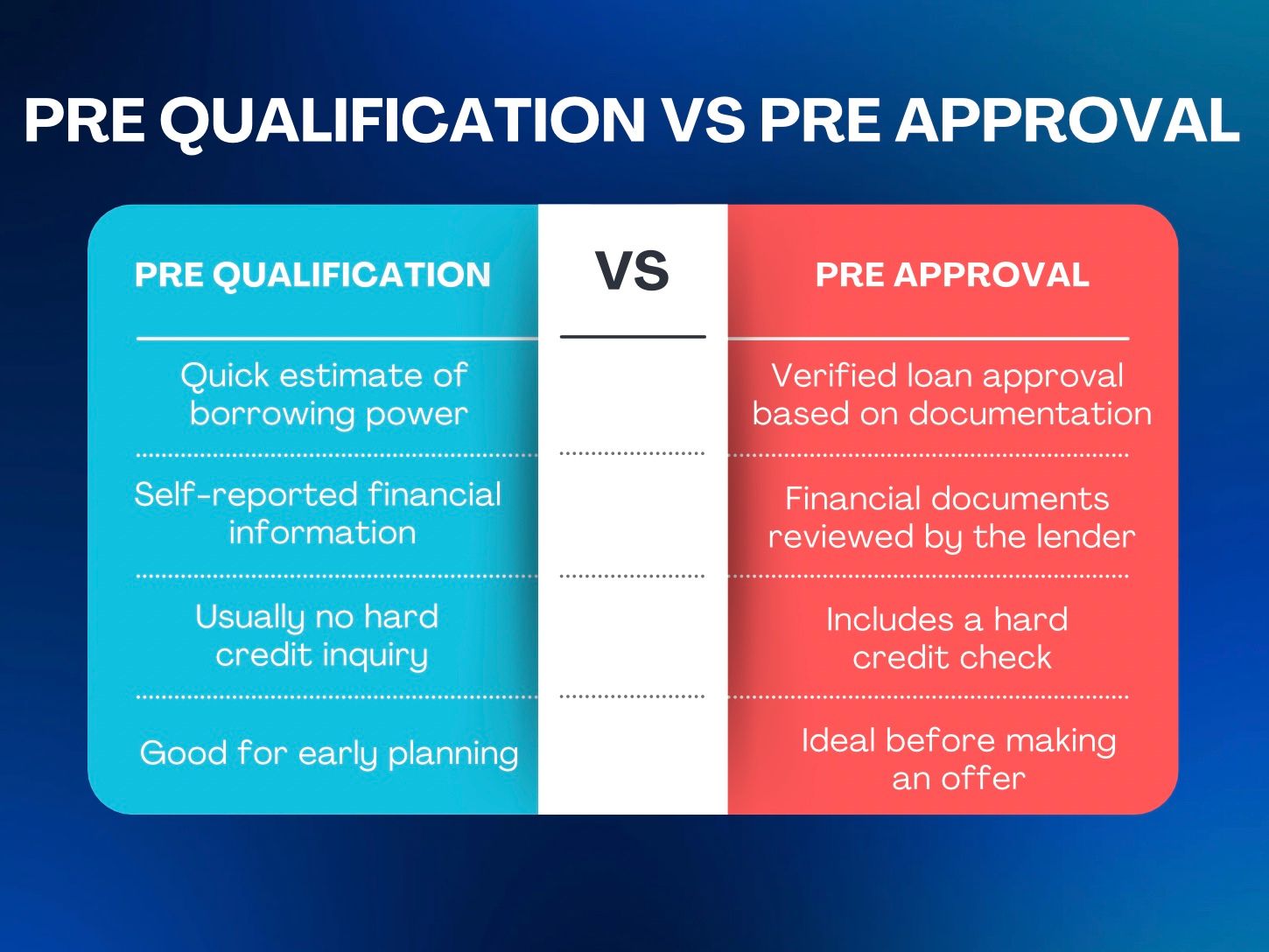
A pre-qualification is usually the first step toward financing a home purchase.


It’s designed to give you a general idea of how much you may be able to borrow based on the financial information you provide.


The process is typically quick and can often be completed online or over the phone.


During pre-qualification, a lender may ask about:


  • Your annual income
  • Current debts
  • Savings and assets
  • Employment status
  • Estimated down payment


Unlike a pre-approval, you usually won’t need to provide documentation to verify this information.


The lender simply uses the numbers you provide to estimate your purchasing power.


Why Get Pre-Qualified? Pre-qualification can help you:


  • Understand a realistic price range.
  • ✅ Estimate your monthly payment.
  • ✅ Begin planning your home search.
  • ✅ Identify financial goals before seriously shopping.


It’s a helpful starting point—but it’s important to remember that it’s only an estimate, not a loan commitment.

What Is a Mortgage Pre-Approval?


A pre-approval takes the process much further.


Instead of relying on estimated information, the lender carefully reviews your financial documents to determine whether you qualify for a mortgage.


This usually involves completing a full loan application and providing documentation such as:


  • W-2s
  • Recent pay stubs
  • Tax returns
  • Bank statements
  • Asset documentation
  • Employment verification


The lender will also perform a hard credit inquiry, which may cause a small, temporary change to your credit score.


Once everything has been reviewed, you’ll receive a pre-approval letter stating the loan amount you may qualify for, subject to the property’s appraisal and final underwriting.


Why Pre-Approval Matters:


A pre-approval offers several important advantages.


Stronger Buying Power:


When sellers receive multiple offers, they naturally want confidence that the buyer can complete the purchase.


A pre-approval demonstrates that your finances have already been reviewed by a lender, making your offer more credible.


More Accurate Budget:


Because your financial information has been verified, you’ll have a much clearer understanding of what you can comfortably afford.


That means you can shop with confidence while avoiding homes outside your budget.


Faster Closing Process:


Much of the financial review has already been completed before you submit an offer, helping streamline the loan process once you’re under contract.


Why Pre-Approval Is Especially Important in Silicon Valley:


Silicon Valley remains one of the country’s most competitive real estate markets.


While market conditions can vary from city to city, well-priced homes often attract strong interest from qualified buyers.


In many cases, sellers and listing agents expect buyers to include a pre-approval letter when submitting an offer.


Without one, your offer may appear less competitive—even if you’re financially capable of purchasing the home.


Having your financing organized before you begin seriously shopping can help you move quickly when the right property becomes available.

Which One Should You Get?


The answer depends on where you are in your home-buying journey.


If you’re just beginning to explore the market and want a general understanding of your budget, pre-qualification is an excellent first step.


However, if you’re actively searching for a home—or expect to make an offer soon—obtaining a pre-approval is typically the better choice.


It provides greater confidence for you, your lender, and the seller.


The Bottom Line:


Both pre-qualification and pre-approval play important roles in the home-buying process, but they serve different purposes.


Pre-qualification helps you understand where you stand financially.


Pre-approval demonstrates that you’re financially prepared to move forward.


If you’re planning to buy a home in Silicon Valley, getting pre-approved before you begin making offers can help you shop with confidence and put you in a stronger position when you find the right home.


Whether you’re buying your first home, moving into a larger property, or downsizing, having the right financing strategy in place is one of the best ways to set yourself up for success.

Recent Posts

By Scott Perry July 31, 2026
Thinking about selling a luxury home in Silicon Valley? Explore today’s market and what high-end homeowners should consider before making a move.

By Scott Perry July 31, 2026
Explore how Silicon Valley condos and townhomes can offer a more affordable, lower-maintenance alternative to single-family homes for today’s buyers.
By Scott Perry July 23, 2026
Thinking about buying a second home? Learn six important considerations, from maintenance and insurance to property management and long-term costs.
By Scott Perry July 16, 2026
Discover why more homeowners are choosing shorter, local moves to simplify life, reduce maintenance, and find a home that better fits their lifestyle.
By Scott Perry July 9, 2026
Discover how your Silicon Valley home equity could help you relocate, simplify your lifestyle, and create more financial freedom in retirement.
By Scott Perry July 9, 2026
Homes sitting on the market longer may offer buyers lower prices, seller concessions, and better negotiation opportunities. Learn why they deserve a second look.
By Scott Perry July 2, 2026
Learn when paying a buyer’s closing costs makes sense, how seller concessions work, and strategies to help your home sell faster in today’s market.
By Scott Perry June 26, 2026
Learn whether an estate sale or junk removal is the smarter choice when selling an inherited home, and discover which option saves time or maximizes value.
Older couple looking at a laptop in a bright office, with a white coffee cup nearby
By Scott Perry June 20, 2026
Thinking about downsizing in retirement? Learn why some retirees are choosing to upsize instead and how it may help support the next generation.
By Scott Perry June 12, 2026
Learn how off-market home sales may affect property values, tax assessments, and market transparency in today’s housing market.
Show More