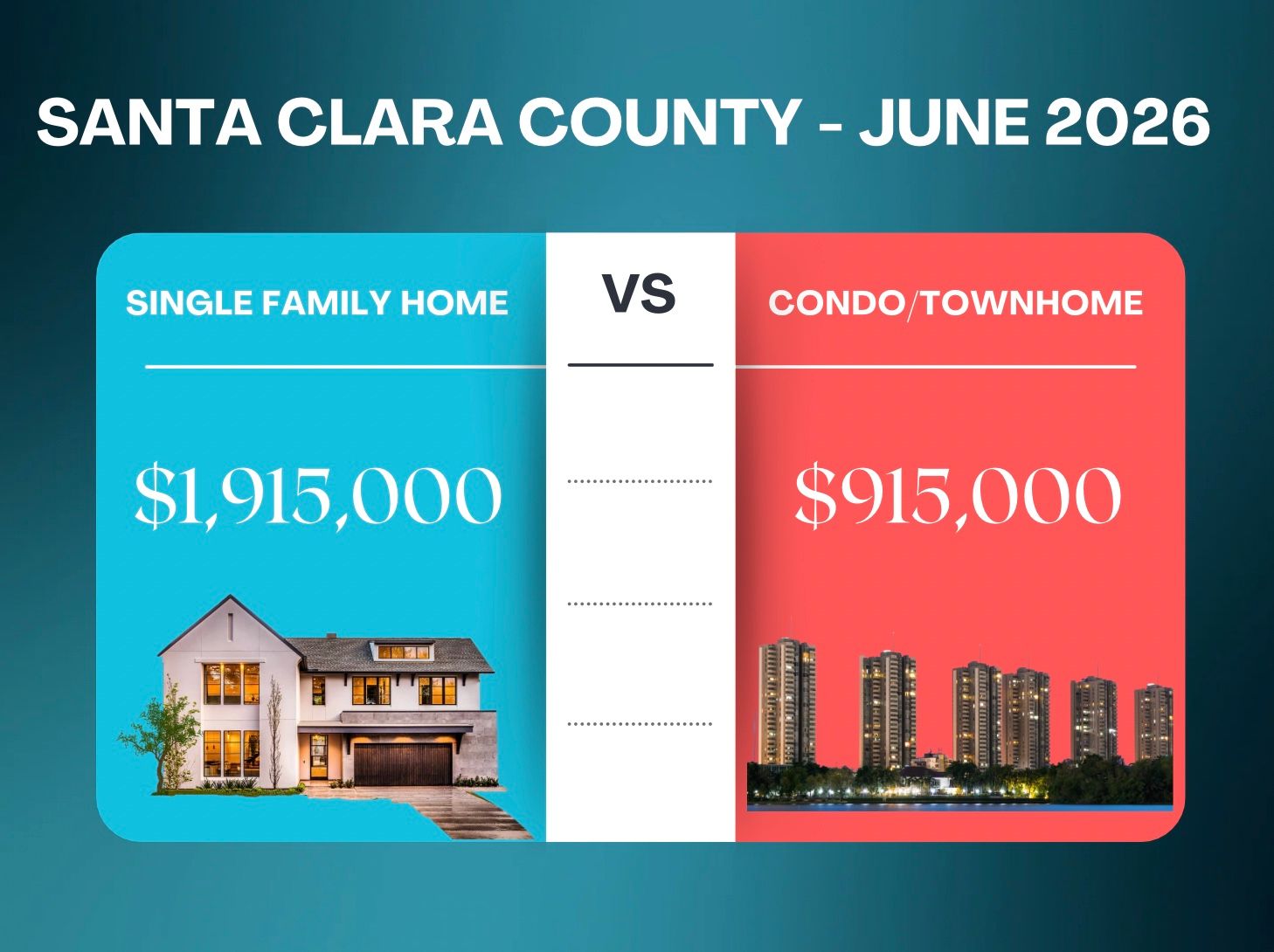
It’s Not Just About Affordability:
Condos and townhomes aren’t exclusively “starter homes.”
For mature professionals and longtime Silicon Valley residents, they can also represent a lifestyle decision.
Perhaps the kids have moved out and maintaining a large house and yard no longer feels necessary. Maybe you travel frequently and want a property that’s easier to lock up and leave. Or perhaps you’d rather live closer to restaurants, shopping, entertainment, healthcare, or work without taking on the cost and maintenance of a detached home in the same area.
In those situations, buying smaller can be less about sacrificing space and more about simplifying how you live.
For homeowners considering selling a larger Silicon Valley property, moving into a condo or townhome may also be one option worth evaluating as part of a downsizing strategy.
Condo, Townhome, or Single-Family Home?
The three property types offer different ownership experiences, and price is only one part of the decision.
With a single-family home, you generally own both the house and the land. You typically have greater privacy, more control over the property, and more outdoor space. But you’re also responsible for most or all maintenance—and in Silicon Valley, the purchase price can be substantially higher.
A townhome can offer something in between. Townhomes are often multi-level and may provide more interior space and privacy than a condo while sharing one or more walls with neighboring properties. Depending on the development, owners may also have a garage, patio, or small outdoor area.
With a condo, you generally own the interior of your unit while common areas and exterior components are managed collectively through the homeowners association.
That can mean less exterior maintenance for you, and some communities offer amenities such as pools, fitness centers, clubhouses, or secured entrances.
But that convenience comes with an important consideration: HOA dues and rules.
Don’t Look at Purchase Price Alone:
A lower purchase price doesn’t automatically mean a condo or townhome is the better financial decision.
HOA dues can add hundreds—or, in some communities, considerably more—to your monthly housing expenses. Buyers should understand what those dues cover, whether the association has adequate reserves, and whether special assessments are planned or likely.
You’ll also want to consider property taxes, insurance, parking, community restrictions, financing requirements, and the property’s long-term suitability.
The goal isn’t simply to find the least expensive way into Silicon Valley real estate.
It’s to find the property that makes the most sense for your finances, lifestyle, and future plans.
A Different Definition of the “Right Home”:
For years, the detached house with a large yard has been treated as the ultimate goal of homeownership.
But the right home doesn’t have to be the biggest one. For a busy Silicon Valley professional, a modern townhome close to work may offer more value than a larger property farther away.
For an empty nester, a low-maintenance condo near restaurants and amenities may fit this stage of life better than the family home they’ve maintained for decades.
And for someone trying to establish homeownership in one of the country’s most expensive housing markets, an attached property may provide a more accessible place to begin.