4 States Silicon Valley Real Estate Investors Should Consider in 2026
Looking beyond California? Discover why Texas, Florida, Indiana, and Georgia may be worth exploring for rental property investments—and what to evaluate before buying.
For many Silicon Valley residents, real estate investing comes with a significant challenge: the cost of getting started.
With property prices remaining high throughout communities such as San Jose, Santa Clara, Sunnyvale, Cupertino, and Saratoga, purchasing an additional home for rental income can require substantial upfront capital.
But what if your next investment property didn’t have to be in California?
Across the United States, investors can find markets with different home prices, rental demand, ownership expenses, and long-term growth potential.
For those focused on generating rental income, exploring properties outside Silicon Valley may provide additional opportunities.Four states that deserve consideration are Texas, Florida, Indiana, and Georgia.
Each offers different advantages and risks, making it important to evaluate individual markets rather than assume that an entire state will deliver strong investment returns.
Why Silicon Valley Investors Are Looking Beyond California:
Silicon Valley remains an attractive place to own real estate, but its high purchase prices can make it difficult for some investors to generate positive monthly cash flow.
For example, a rental property’s income may not be sufficient to cover mortgage payments, property taxes, insurance, maintenance, and other expenses when the initial purchase price is particularly high.
In certain out-of-state markets, lower acquisition costs may create opportunities for investors to purchase rental properties with less capital.
This can be especially appealing to investors who prioritize monthly rental income rather than relying primarily on future appreciation.
However, purchasing a less expensive property doesn’t automatically make it a better investment.
A lower-priced home may come with higher vacancy risk, unexpected repairs, property management challenges, or weaker long-term demand.
The goal isn’t simply to buy where homes are cheaper. It’s to identify properties where realistic rental income, ownership expenses, and long-term market conditions align with your investment goals.
Understanding Rental Yield: Why the Numbers Matter:
Before comparing investment opportunities across states, it’s important to understand how rental yield works.
Rental yield measures the relationship between a property’s rental income and its purchase price or market value.
There are two commonly discussed types.
Gross Rental Yield
Gross rental yield compares annual rental income with the property’s purchase price, before accounting for operating expenses.
For example, imagine purchasing a rental property for $300,000 and renting it for $2,100 per month.
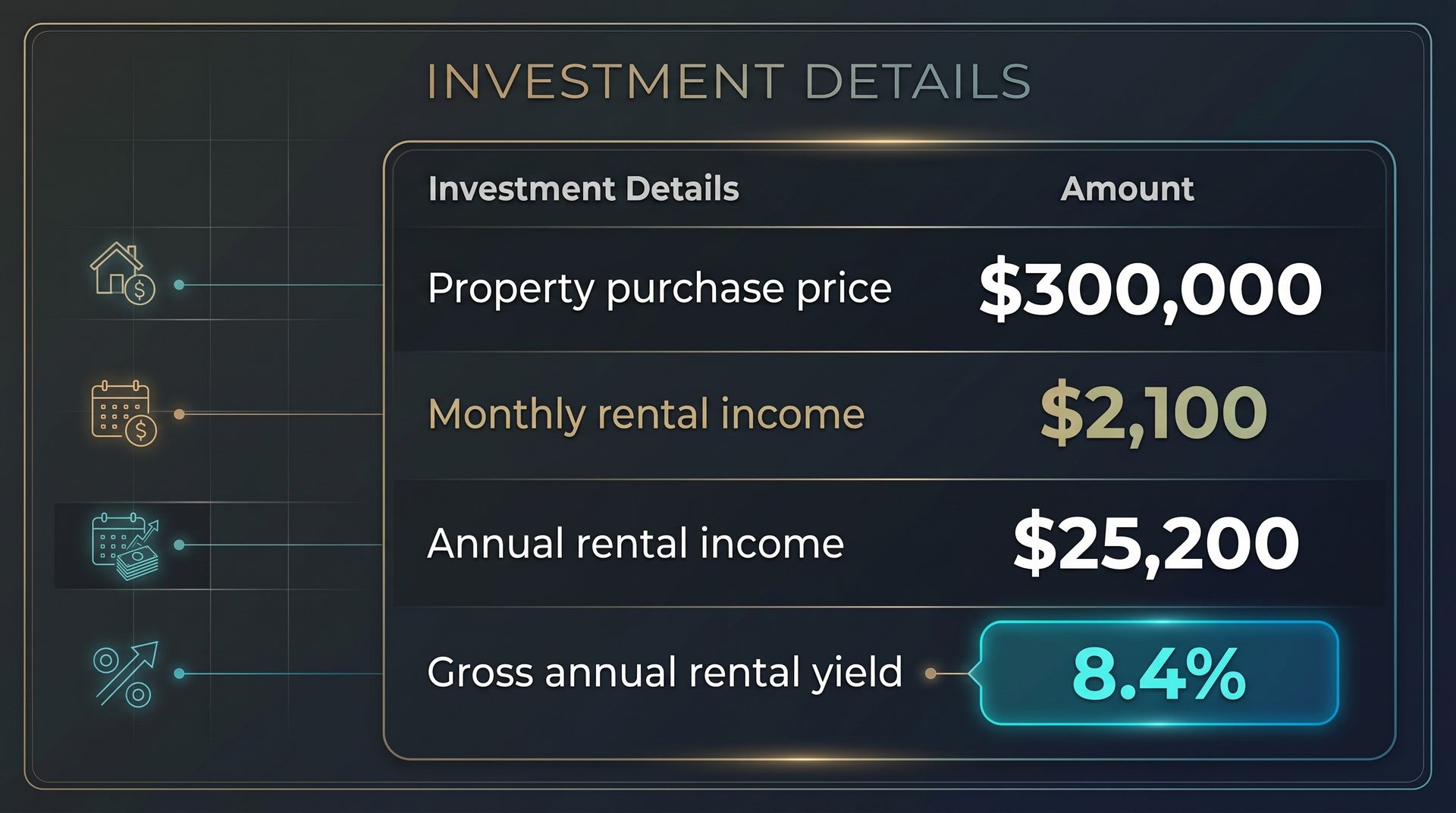
This means the property’s annual rent equals approximately 8.4% of its purchase price. However, an 8.4% gross rental yield does not mean the investor earns an 8.4% annual profit.
Expenses still need to be considered.
Net Rental Yield and Cash Flow:
Net rental yield considers operating expenses such as property taxes, insurance, maintenance, management fees, and vacancy allowances.
Cash flow goes a step further by accounting for mortgage payments and other financing-related expenses.
A property with attractive gross rental income may still generate limited or negative monthly cash flow once all costs are included.
That’s why investors should evaluate more than the advertised rent-to-price ratio.
1. Texas: A Large Market With Diverse Investment Opportunities:
Texas is often included in discussions about out-of-state rental property investing because of its large population, diverse economy, and range of housing markets.
Major metropolitan areas such as Dallas–Fort Worth, Houston, San Antonio, and Austin offer different property types and rental market conditions.
Investors may also explore smaller cities where acquisition costs differ from those in major employment centers.
Why Investors Consider Texas
Diverse Employment Centers: Texas has major industries spanning technology, healthcare, energy, manufacturing, logistics, and professional services.
Employment opportunities can support rental demand, although conditions vary by metropolitan area.
Different Property Price Points: Depending on the city and neighborhood, investors may find homes priced substantially below comparable Silicon Valley properties.
This can create opportunities to explore different investment strategies and financing structures.
No Individual State Income Tax: Texas does not impose an individual state income tax.
However, investors should remember that rental income may still be subject to federal taxation and other applicable tax obligations.
What Investors Should Watch:
Texas property taxes can be relatively high compared with those in some other states.
Insurance costs also deserve attention, particularly in areas exposed to hurricanes, flooding, hail, or other severe weather.
Additionally, rapid construction activity in some markets can increase rental competition.
Investment takeaway: Texas offers a wide variety of rental markets, but property taxes, insurance, local supply, and neighborhood demand should be evaluated carefully.
2. Florida: Rental Opportunities With Important Insurance Considerations:
Florida continues to attract real estate investors interested in its population centers, tourism economy, and residential rental markets.
However, investment opportunities vary considerably between cities and property types.
Markets such as Jacksonville, Orlando, Tampa, and certain smaller communities may appeal to investors with different budgets and strategies.
Why Investors Consider Florida:
Diverse Rental Markets: Florida has demand for several types of housing, including long-term rentals, retirement-oriented properties, and housing near employment centers.
However, investors should distinguish between long-term residential rental demand and vacation rental demand.
These markets operate differently and may be subject to different regulations.
A Range of Property Types: Investors can explore single-family homes, townhomes, condominiums, and small multifamily properties.
Each property type has different ownership costs and management requirements.
No Individual State Income Tax: Like Texas, Florida does not impose an individual state income tax.
Nevertheless, rental property owners must still consider federal taxes, property taxes, and other applicable obligations.
What Investors Should Watch:
Insurance is one of the most important considerations when evaluating Florida investment properties.
Hurricane exposure, flood risks, building age, and coverage availability can significantly affect ownership costs.
Condominium investors should also review association finances, reserve requirements, insurance coverage, and potential special assessments.
In some locations, short-term rental regulations may restrict how a property can be used.
Investment takeaway: Florida may offer rental opportunities, but insurance, property condition, and association-related expenses can materially affect investment returns.
3. Indiana: Exploring Lower-Cost Rental Property Markets:
Indiana may appeal to investors interested in markets where residential property prices can be lower than those in many coastal metropolitan areas.
Cities such as Indianapolis, Fort Wayne, and Lafayette have distinct local economies and housing markets.
For investors accustomed to Silicon Valley prices, these markets may offer opportunities to evaluate properties with smaller initial capital requirements.
Why Investors Consider Indiana:
Potentially Lower Acquisition Costs: Certain Indiana markets offer residential properties at purchase prices well below those commonly found in Silicon Valley.
This may allow investors to explore rental property ownership with less upfront capital.
Established Employment Sectors: Healthcare, manufacturing, logistics, education, and other industries contribute to employment in different parts of the state.
Local job conditions can influence rental demand and tenant stability.
Opportunities for Cash Flow Analysis: Lower property prices may create favorable rent-to-price relationships in some neighborhoods.
However, these relationships should be evaluated using realistic operating expenses and vacancy assumptions.
What Investors Should Watch:
Older housing stock may require more maintenance or capital improvements.
Investors should carefully evaluate roofs, plumbing, electrical systems, heating equipment, and other major components.
Neighborhood-level rental demand can also vary considerably.
A property with a low purchase price may not be a strong investment if tenant demand is limited or maintenance expenses are excessive.
Investment takeaway: Indiana may be worth researching for investors prioritizing acquisition costs and potential rental cash flow, but property condition and local demand remain essential.
4. Georgia: Opportunities Beyond Atlanta
Georgia offers a mix of large metropolitan areas, smaller cities, and suburban communities.
While Atlanta receives considerable attention, investors may also research markets such as Macon, Warner Robins, Augusta, and Columbus.
Each has its own employment base, rental market characteristics, and property pricing.
Why Investors Consider Georgia:
A Range of Housing Markets: Georgia offers investment opportunities across urban, suburban, and smaller metropolitan communities.
Purchase prices and rental demand vary depending on location and property type.
Employment and Infrastructure: Major industries include logistics, manufacturing, healthcare, education, and professional services.
Local economic activity may support rental demand, although growth is not uniform across the state.
Potential for Lower Purchase Prices: Some Georgia communities offer residential properties at prices considerably below those in Silicon Valley.
For investors with limited acquisition budgets, this may create additional options to explore.
What Investors Should Watch:
Investors should evaluate neighborhood-level employment conditions, rental competition, property taxes, insurance, and maintenance requirements.
Some lower-priced properties may require significant renovations or ongoing repairs.
Rental regulations and local licensing requirements should also be reviewed before purchasing.
Investment takeaway: Georgia offers several markets worth researching, but selecting the right property and neighborhood matters more than choosing the state alone.
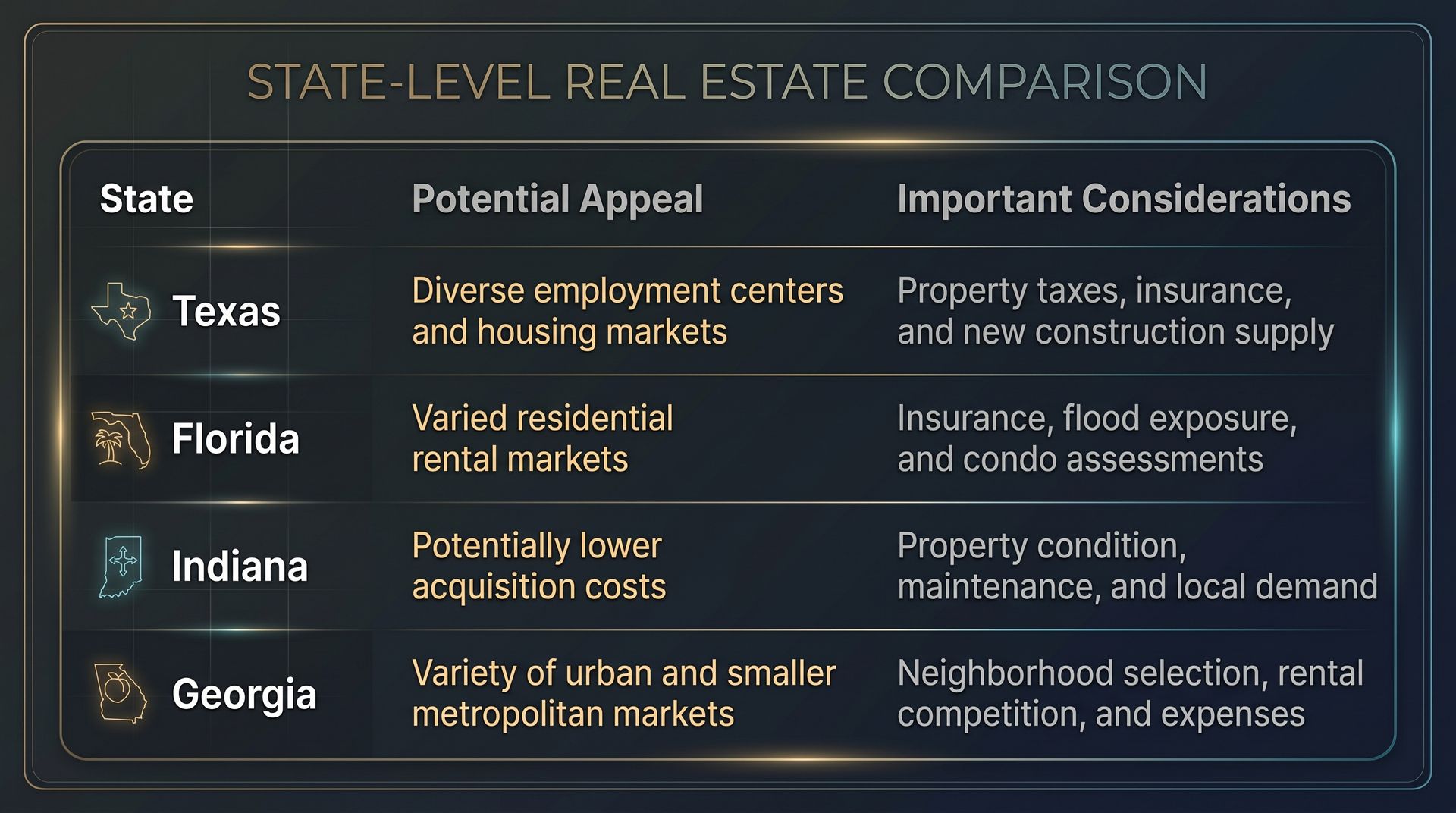
Comparing Texas, Florida, Indiana, and Georgia:
Although all four states may offer alternatives to California’s high-cost housing market, their investment characteristics differ.
What Is Turnkey Real Estate Investing?
For Silicon Valley residents considering an out-of-state rental property, managing a home from hundreds or thousands of miles away can be a concern.
One option some investors explore is turnkey real estate investing.
A turnkey rental property is generally marketed as ready for rental use, often with renovations completed and property management arrangements available.
Some turnkey properties may already have tenants, while others are offered as rent-ready homes.
Potential Benefits of Turnkey Properties:
A turnkey investment may offer:
- Reduced need for major renovations immediately after purchase.
- Access to local property management services.
- A potentially shorter timeline before rental operations begin.
- Greater convenience for investors who live outside the property’s market.
However, turnkey does not mean risk-free or completely passive.
What Should You Verify Before Buying?
Investors should independently evaluate the property’s condition, purchase price, projected rent, management fees, and operating expenses.
A property marketed as turnkey may still require repairs or experience vacancies.
Rental projections should be supported by comparable properties rather than relying exclusively on the seller’s estimates.
Investors should also evaluate the experience, fees, and responsibilities of any property management company.
Even when purchasing a turnkey property, independent inspections and local professional guidance remain important.
Five Things Silicon Valley Investors Should Know Before Buying Out of State
Investing in another state can introduce opportunities, but it also requires additional due diligence.
1. Research the Local Rental Market:
Look beyond statewide averages.
Evaluate rental demand, vacancy conditions, employment trends, neighborhood characteristics, and comparable rental properties.
2. Calculate Total Ownership Costs:
Include mortgage payments, property taxes, landlord insurance, maintenance, management fees, vacancy reserves, and potential capital improvements.
3. Understand State and Local Landlord Regulations:
Landlord-tenant laws differ by jurisdiction.
Security deposits, lease requirements, eviction procedures, licensing, and other rules may affect how a rental property operates.
4. Build a Reliable Local Team:
Out-of-state investors may need assistance from a local Realtor, property manager, inspector, insurance professional, attorney, and other qualified service providers.
5. Compare the Investment With Your Financial Goals:
Consider whether your priority is monthly rental income, long-term appreciation, portfolio diversification, or another objective.
A property that works for one investor may not fit another investor’s financial circumstances or tolerance for risk.
Is Investing Out of State Better Than Buying in
Silicon Valley?
Not necessarily. Silicon Valley offers its own investment characteristics, including established communities, major employment centers, and a highly specialized housing market.
For investors familiar with the region, purchasing locally may provide advantages such as easier property oversight and greater knowledge of neighborhood conditions.
However, high purchase prices can make achieving positive monthly rental cash flow challenging for some properties.
Out-of-state markets may offer lower acquisition costs and different rental income opportunities.
But they also introduce additional considerations, including remote management, unfamiliar regulations, and local economic risks.
The right investment strategy depends on the individual property, your available capital, and your long-term financial objectives—not simply which state appears most affordable.
Why Working With Experienced Real Estate Professionals Matters:
Purchasing an investment property requires careful research, whether the home is located in Silicon Valley or another state.
An experienced Realtor can help investors evaluate comparable sales, neighborhood conditions, property characteristics, and local market trends.
For Silicon Valley residents considering real estate investments, Scott Perry can provide valuable insight into the local housing market and help evaluate opportunities within the communities he serves.
If you’re considering purchasing in Texas, Florida, Indiana, Georgia, or another state, it’s equally important to work with a qualified real estate professional who understands that specific market.
A local Realtor, along with appropriate financial, tax, legal, and property management professionals, can help you evaluate the practical considerations of purchasing and owning rental property.
The goal is to make informed investment decisions based on realistic expectations, careful financial analysis, and reliable local expertise.
The Bottom Line: Look Beyond Location and Focus
on the Numbers:
For Silicon Valley residents interested in building a real estate investment portfolio, opportunities don’t necessarily end at California’s borders.
Texas, Florida, Indiana, and Georgia offer different housing markets that may be worth exploring, particularly for investors interested in comparing purchase prices and rental income potential.
However, no state guarantees positive cash flow, appreciation, or long-term investment success.
The most important considerations remain the same: What will the property cost? What income can it realistically generate? What expenses and risks come with ownership?
Answering those questions can help investors compare opportunities more effectively, whether they’re purchasing a rental property close to home or across the country.
Thinking about investing in real estate? Scott Perry can help you explore opportunities in Silicon Valley and understand the local market factors that influence property values and investment decisions.
For purchases outside California, working with knowledgeable professionals in the destination market can help you evaluate properties with greater confidence.
Disclaimer: This article is for general educational purposes and does not constitute investment, legal, tax, or financial advice. Property values, rental income, expenses, and investment returns vary. Investors should consult qualified professionals regarding their individual circumstances.
Recent Posts