In this example, choosing the condominium would reduce the 20% down payment by $130,000.
That difference could be meaningful for buyers who have sufficient income to qualify for a mortgage but are still working toward their savings goals. Of course, the purchase price is only part of the equation.
A condominium’s HOA dues, insurance requirements, property taxes, and potential assessments must also be considered when evaluating affordability.
Why Condos Are Worth Exploring in Silicon Valley:
Silicon Valley is made up of communities with different housing styles, price points, and lifestyle advantages.
For buyers who value proximity to employment centers, restaurants, parks, and public transportation, condominiums may provide options in areas where detached homes are considerably more expensive.
San Jose: More Variety in Housing Options:
San Jose offers a diverse mix of condominiums, townhomes, and single-family residences.
Depending on the neighborhood, buyers may find condo communities near downtown amenities, shopping districts, parks, and major commuting routes.
For someone entering the housing market, exploring condos in areas such as Downtown San Jose, Willow Glen, or North San Jose may provide additional choices.
Each neighborhood has its own pricing patterns, inventory, and property characteristics, making local market knowledge especially valuable.
Santa Clara, Convenient Access to Silicon Valley Employers:
Santa Clara’s location near major technology employers, educational institutions, and regional transportation corridors makes it an appealing area for many buyers.
Condominiums may offer an alternative for people who want to live in Santa Clara without purchasing a detached single-family home.
Buyers should compare not only the asking prices but also HOA expenses, parking arrangements, building maintenance, and resale considerations.
Sunnyvale and Cupertino, Exploring Alternatives in Competitive Markets:
In communities such as Sunnyvale and Cupertino, location can play a significant role in property values.
Buyers who find single-family homes outside their preferred budget may discover that condominiums or townhome-style properties provide additional possibilities.
However, attached housing in these markets can still be expensive, and affordability depends on the individual property.
Working with a Realtor who understands Silicon Valley’s neighborhood-level differences can help buyers identify opportunities that align with their budget and priorities.
The Benefits of Buying a Condo Beyond the Purchase Price:
Affordability may be the first reason buyers consider condominiums, but it isn’t necessarily the only advantage.
1. Less Exterior Maintenance:
Many condominium communities have homeowners associations responsible for maintaining certain shared areas and exterior components.
Depending on the association’s governing documents, this may include landscaping, common-area maintenance, exterior building upkeep, and shared amenities.
For buyers who prefer spending their weekends enjoying their community rather than maintaining a yard, this can be appealing.
However, maintenance responsibilities vary by association, so it’s important to understand exactly what the HOA covers.
2. Access to Shared Amenities:
Some condominium communities offer amenities such as swimming pools, fitness centers, clubhouses, landscaped courtyards, and recreational areas.
These features may provide conveniences that would be expensive to maintain individually.
Remember that amenities are typically supported through HOA dues, so buyers should consider whether they’ll actually use the facilities they’re paying for.
3. Opportunities in Desirable Locations:
In certain neighborhoods, buying a condominium may make it possible to live closer to work, family, restaurants, parks, or public transportation.
For buyers who prioritize location over square footage, this trade-off can be worthwhile.
A smaller home in a preferred neighborhood may be more practical than a larger property that requires a significantly longer commute.
4. A Home That Fits Your Current Lifestyle:
Not everyone needs a large house. First-time buyers, professionals, couples, and people seeking a lower-maintenance lifestyle may find that a condominium provides the right balance of comfort and convenience.
For some longtime homeowners, a condo can also be an appealing downsizing option.
Moving from a larger property into a condominium may simplify certain maintenance responsibilities while allowing homeowners to remain close to the communities they know.
What Should You Know Before Buying a Condo in California?
While condominiums can offer important advantages, buyers should understand how condo ownership differs from owning a detached single-family home.
In California, condominium purchases involve considerations that deserve careful attention before making a final decision.
HOA Fees and Monthly Housing Costs:
Most condominium communities charge regular homeowners association dues.
These fees help cover the association’s operating expenses and may contribute to maintenance, insurance, reserves, and shared amenities.
Monthly dues vary significantly from one community to another.
When comparing properties, buyers should calculate their total expected housing expenses, including:
- Mortgage principal and interest.
- Property taxes.
- Homeowners insurance.
- HOA dues.
- Utilities and other recurring expenses.
A condominium with a lower purchase price may not necessarily have a lower total monthly cost than another property.
HOA Financial Health and Reserve Funds:
Before purchasing a condo, it’s important to review the homeowners association’s financial condition.
Buyers should examine available HOA documents, including budgets, reserve information, meeting minutes, and disclosures about known or anticipated assessments.
An association with insufficient reserves may face challenges funding major repairs or maintenance projects.
This can sometimes lead to special assessments or increased HOA dues.
In California, buyers should carefully review the association documents and disclosures provided during the transaction.
Rules, Restrictions, and Community Policies:
Condominium associations may establish rules concerning pets, parking, renovations, rental arrangements, and the use of common areas.
These restrictions can influence how owners use their properties.
For example, buyers who hope to rent out their condominium in the future should review any applicable rental restrictions before purchasing.
Understanding the community’s governing documents can help prevent surprises after closing.
Mortgage Financing and Condo Eligibility:
Financing a condominium can involve additional requirements compared with financing some detached single-family homes.
Depending on the loan program, lenders may review the condominium project itself, including factors such as insurance coverage, financial condition, occupancy, litigation, and other eligibility requirements.
A buyer may qualify financially for a mortgage while a particular condominium project does not meet the lender’s requirements.
That’s why it’s helpful to work with a mortgage professional familiar with condominium financing.
An experienced local Realtor can also help buyers identify important HOA disclosures, coordinate the review process, and recognize when additional professional guidance may be needed.
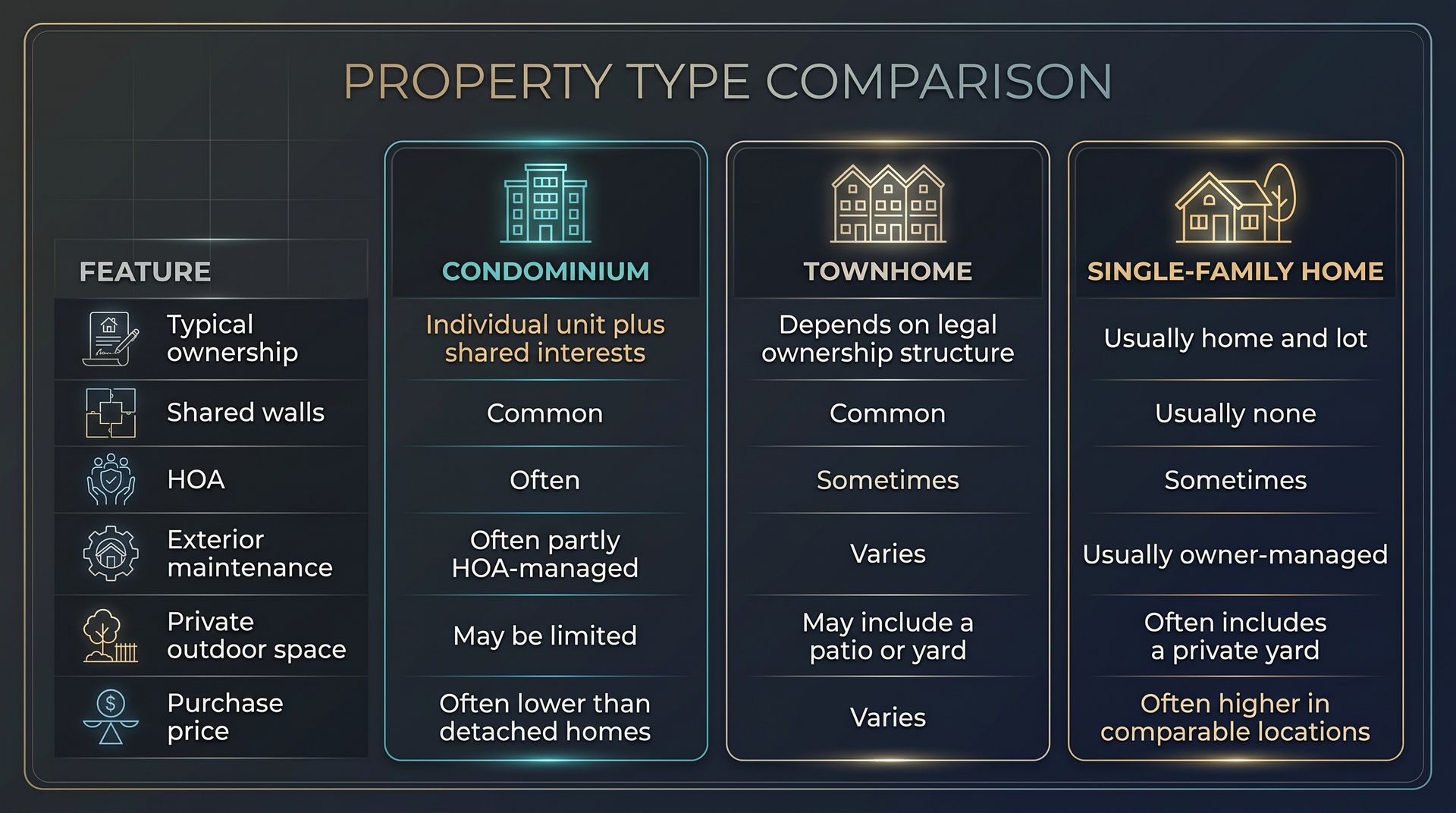
Condo vs. Townhome vs. Single-Family Home: What’s the Difference?
If you’re considering alternatives to a traditional house, you may also want to explore townhomes.
Although these property types can look similar from the outside, their ownership structures and maintenance responsibilities may differ.