
Thinking About Selling Your Home As-Is? Here's What to Know First

If selling your home is on your radar this year, you may be weighing an important decision:
Should you sell your home as-is to avoid repairs, stress, and extra work?
Or does it make more sense to invest in a few updates so your home shows better and potentially sells for more?
In 2026, this choice carries more weight than it has in recent years. Here’s why.
- Should you sell your home as-is to avoid repairs, stress, and extra work?
- Or does it make more sense to invest in a few updates so your home shows better and potentially sells for more?
In 2026, this choice carries more weight than it has in recent years. Here’s why.
-More Homes on the Market Means Conditions Matters Again-
Inventory has been steadily rising, giving buyers more choices than they’ve had in quite some time. According to a Realtor.com forecast, the number of homes for sale could increase by another 8.9% this year.
With more options available, buyers are no longer forced to overlook flaws. They’re comparing homes side by side—and details like condition, presentation, and upkeep are becoming important again.
That shift explains why many sellers are choosing to make at least minor improvements before listing.
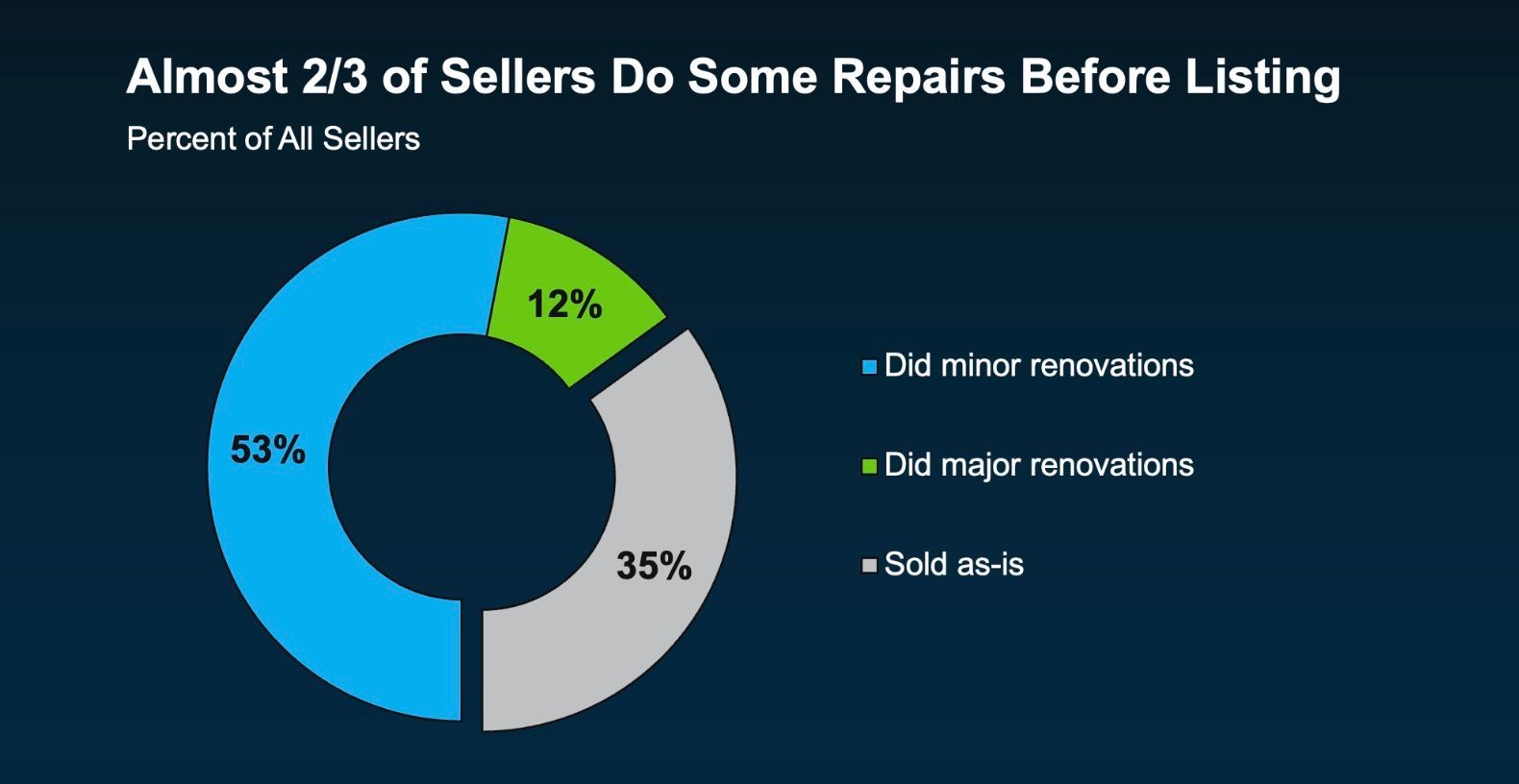
A recent
National Association of Realtors (NAR) study found that
65% of sellers completed small repairs or updates before selling, while only
35% chose to sell their homes as-is.
-What Selling "As-Is" Really Signals to Buyers-
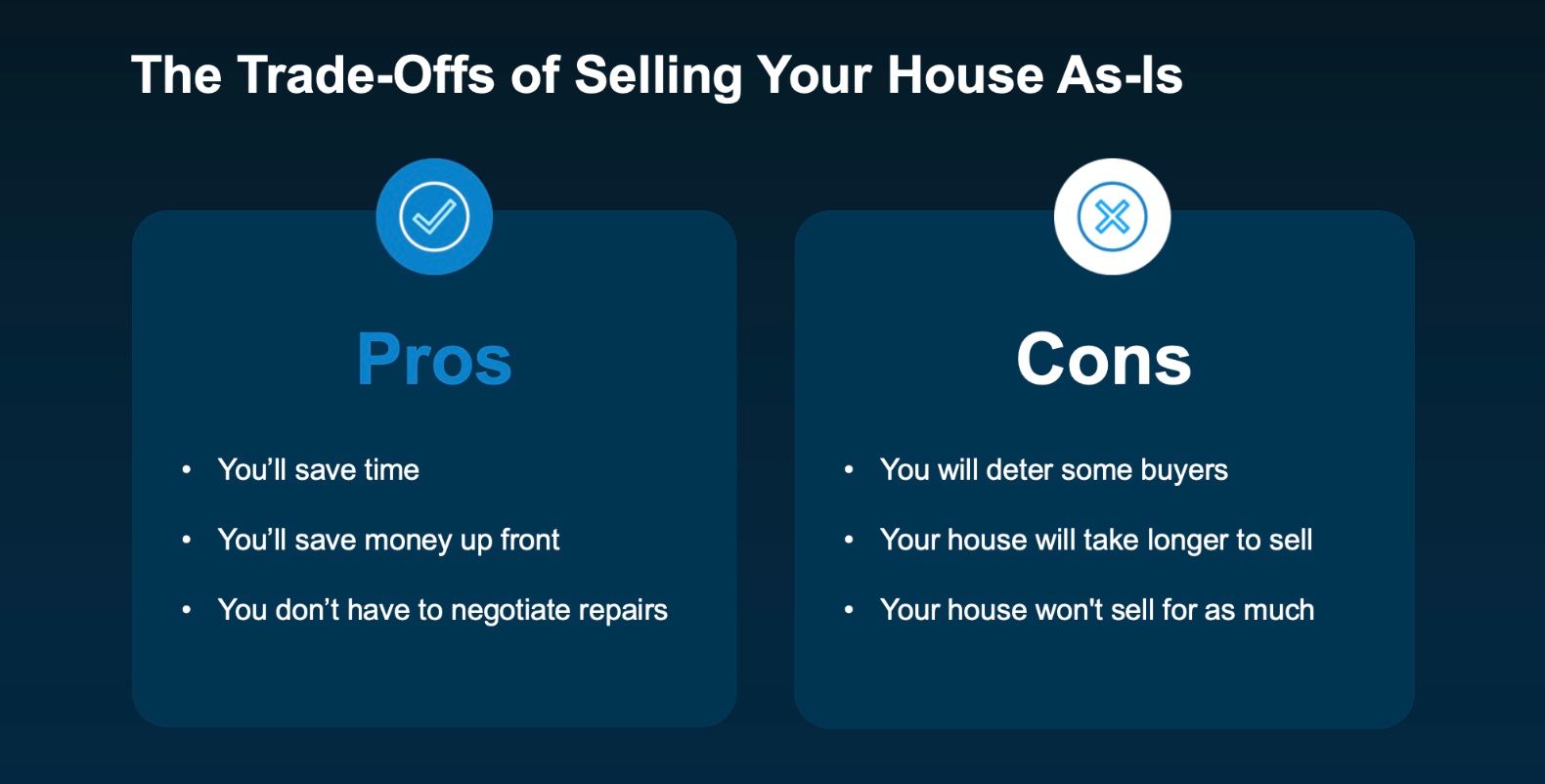
When you sell a home as-is, you’re letting buyers know upfront that you won’t be making repairs or negotiating fixes after inspections. While that approach can simplify the process for you, it often limits who’s willing to make an offer.
Move-in-ready homes tend to attract:
- More showings
- More offers
- Stronger pricing
Homes that need work usually appeal to a smaller pool of buyers—often investors or buyers looking for a discount. That can result in fewer offers, longer days on market, and, in many cases, a lower final sale price.
Selling as-is doesn’t mean your home won’t sell. It simply means it may not sell for top dollar.
-How a Real Estate Agent Helps You to Decide-
There’s no universal answer to whether selling as-is is the right move. The best choice depends on your home’s condition, your goals, and what buyers in your local market expect.
That’s where working with an experienced agent makes all the difference.
If you sell as-is: An agent can highlight the home’s strongest selling points—like location, lot size, layout, or neighborhood—to help buyers focus on potential instead of repairs.
If you make updates: Your agent can guide you toward improvements that matter most to buyers, helping you avoid spending money where it won’t pay off.
Another advantage? Timing. Spring is typically the busiest homebuying season, which means there’s still time to tackle selective repairs or updates without feeling rushed.
Bottom Line:
Selling a home as-is can still make sense in certain situations—but in today’s more competitive market, it may come at a cost.
- You don’t have to make repairs before listing, but taking the time to explore your options could help you maximize your outcome. A quick conversation with a trusted real estate professional can help you decide which approach makes the most sense for your home and your goals.
Disclaimer:
This information is for educational purposes only and is not tax advice. Real estate transactions and tax laws are complex. You should consult with a qualified tax professional and a qualified intermediary to understand how these rules apply to your specific situation.