
Don't Overlook a Home Just Because It's Been On the Market For Too Long

When you come across a home that’s been sitting on the market for a while, it’s natural to hesitate.
You might wonder:
What’s wrong with it?
Why hasn’t it sold yet?
Am I missing something?
A few years ago, those were fair questions. But today’s market works differently — and skipping over these homes too quickly could mean missing a real opportunity.
More Time on the Market Isn't the Red Flag It Used to Be
Not long ago, homes were selling in a matter of days — sometimes even hours. Anything that didn’t move quickly raised concerns.
That’s no longer the case.
Inventory has increased, giving buyers more options. As a result, homes are naturally taking longer to sell. This shift is reflected in the current national data:
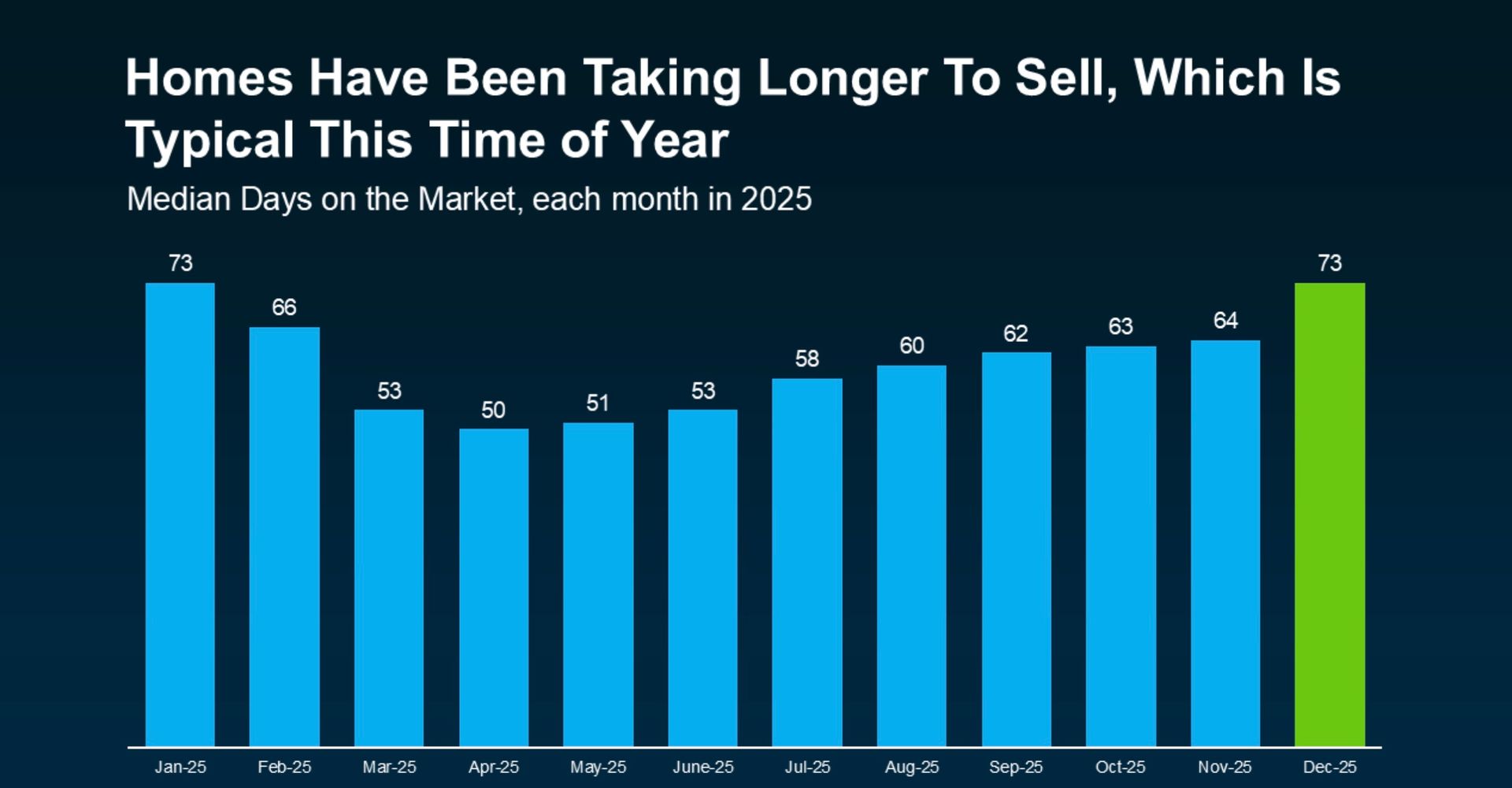
It’s important to note that the timeframe shown above reflects the national average.
Here in Silicon Valley, the pace is still much faster. Homes that sit on the market “longer than expected” are typically on the market for about 2 to 3 weeks, not months.
So while 73 days may be considered normal nationally, local market conditions tell a very different story — and context matters.
A few years ago, those were fair questions. But today’s market works differently — and skipping over these homes too quickly could mean missing a real opportunity.
Why Some Homes Take Longer to Sell?
In today’s market, a home sitting a bit longer doesn’t automatically mean something is wrong.
In many cases, it comes down to factors like:
- Pricing that started slightly above market value
- Strong competition from nearby listings
- Photos or marketing that didn’t fully showcase the home
- Timing — launching during a slower moment in the market
- A larger number of available homes in the area
None of these are necessarily deal-breakers. In fact, they often create opportunity.
What Buyers Often Get Wrong
It’s easy to assume that a home that hasn’t sold must have hidden issues. But that’s not always true.
And if there are concerns, they’ll typically come to light during inspections — giving you the information you need to make an informed decision or negotiate accordingly.
In many cases, these homes represent some of the best value in the market. The key is knowing which ones are worth a closer look.
That’s where working with a knowledgeable local agent makes a real difference. They can review disclosures, evaluate pricing strategy, and help you identify opportunities that other buyers may have overlooked.
The Bottom Line
A home sitting on the market isn’t always a warning sign — sometimes it’s simply an overlooked opportunity.
If you’re open to exploring these types of listings, having the right guidance can help you separate the ones worth considering from the ones to skip.
And remember, while national data may suggest homes are taking longer to sell, Silicon Valley remains a much faster-paced market, where homes that linger are typically on the market for just 2 to 3 weeks, compared to the 73-day national average.
Disclaimer:
This information is for educational purposes only and is not tax advice. Real estate transactions and tax laws are complex. You should consult with a qualified tax professional and a qualified intermediary to understand how these rules apply to your specific situation.